
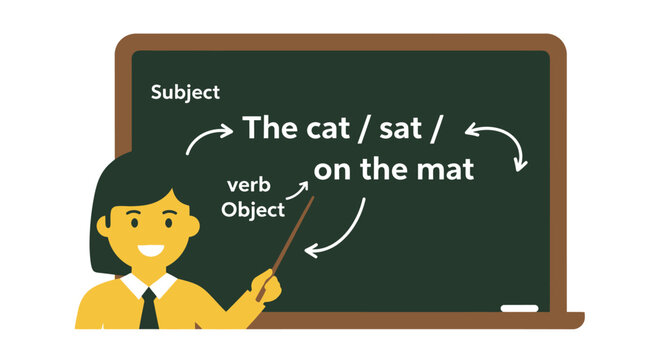
What Is Subject Verb Agreement?
Subject verb agreement rules are one of the most important parts of English grammar. Many students lose marks in exams because of mistakes in subject–verb agreement.
In simple words, the verb must agree with the subject in number and person.
If the subject is singular, the verb must be singular.
If the subject is plural, the verb must be plural.
Example:
- She writes well.
- They write well.
In this blog, you will learn subject verb agreement rules explained simply with examples, common mistakes, exam tips, and practice sentences.
Why Subject Verb Agreement Is Important
Learning subject verb agreement rules is important because:
- It improves grammar accuracy
- It is frequently asked in school exams
- It is important for competitive exams (SSC, PSC, UPSC, etc.)
- It improves spoken and written English
Correct subject–verb agreement makes your English clear and professional.
Basic Rule of Subject Verb Agreement
Rule 1: Singular Subject → Singular Verb
Examples:
- The boy plays cricket.
- She likes music.
- My father works in an office.
Rule 2: Plural Subject → Plural Verb
Examples:
- The boys play cricket.
- They like music.
- My parents work in an office.
Subject Verb Agreement with “And”
When two subjects are joined by and, the verb is usually plural.
Examples:
- Ravi and Raju are friends.
- Tea and coffee are served here.
Exception:
If the two nouns refer to one person or one idea, the verb is singular.
Examples:
- Bread and butter is my breakfast.
- My friend and guide has helped me.
Subject Verb Agreement with “Or / Nor”
When subjects are joined by or or nor, the verb agrees with the nearest subject.
Examples:
- Either Ram or his brothers are coming.
- Neither the students nor the teacher is present.
- Either you or I am responsible.
Subject Verb Agreement with Collective Nouns
Collective nouns refer to a group (team, class, family, committee).
Singular sense → Singular verb
- The team is winning.
- The class is silent.
Individual sense → Plural verb
- The team are arguing among themselves.
- The family are fighting.
Subject Verb Agreement with Indefinite Pronouns
Words like everyone, someone, nobody, each, anyone are singular.
Examples:
- Everyone is ready.
- Each of the students has a book.
- Somebody has called you.
Subject Verb Agreement with “Each” and “Every”
Always take a singular verb.
Examples:
- Each student is responsible.
- Every boy likes sports.
- Every one of the answers is correct.
Subject Verb Agreement with “None”
- When “none” means not one, use singular.
- When “none” means not any, plural is also acceptable.
Examples:
- None of the money is lost.
- None of the students are absent.
Subject Verb Agreement with Uncountable Nouns
Uncountable nouns take singular verbs.
Examples:
- Milk is healthy.
- Information is useful.
- Furniture is expensive.
Subject Verb Agreement with Plural Nouns That Look Singular
Some nouns look plural but are singular in meaning.
Examples:
- Mathematics is difficult.
- Physics is my favourite subject.
- News is important.
Subject Verb Agreement with “A Number of” and “The Number of”
- A number of → plural verb
- The number of → singular verb
Examples:
- A number of students are absent.
- The number of students is increasing.
Subject Verb Agreement with Titles and Names
Titles of books, movies, or organizations are treated as singular.
Examples:
- “The Wings of Fire” is a famous book.
- The United Nations is an international body.
Subject Verb Agreement with Distance, Time, and Money
These take singular verbs.
Examples:
- Five kilometers is a long distance.
- Ten years is a long time.
- Fifty rupees is enough.
Common Errors in Subject Verb Agreement
Error 1: Wrong verb with singular subject
❌ She play well.
✅ She plays well.
Error 2: Confusion with collective nouns
❌ The team are winning the match. (wrong sense)
✅ The team is winning the match.
Error 3: Wrong verb after “each”
❌ Each student have a pen.
✅ Each student has a pen.
Subject Verb Agreement Examples for Practice
Fill in the blanks:
- Everyone ___ happy today.
- The number of applicants ___ increasing.
- Bread and butter ___ his breakfast.
- Neither the boys nor the girl ___ selected.
- Mathematics ___ my favourite subject.
Answers:
- is
- is
- is
- is
- is
Subject Verb Agreement for Exams – Important Tips
- Identify the main subject, not nearby words
- Ignore phrases like along with, as well as, together with
- Watch out for collective nouns
- Remember special expressions
- Practice daily grammar exercises
These tips will help you avoid common mistakes in exams.
Subject Verb Agreement in Spoken English
Correct subject verb agreement rules make spoken English sound confident and natural.
Examples:
- He does his work sincerely.
- We are ready to begin.
- Everyone knows the answer.
Subject verb agreement rules form the backbone of English grammar. Without proper agreement, sentences sound incorrect and confusing.
By learning:
- Basic agreement rules
- Special cases
- Common errors
you can improve your grammar, score better marks in exams, and speak English confidently. Practice regularly, revise the rules, and soon subject–verb agreement will become easy for you
Leave a Reply